

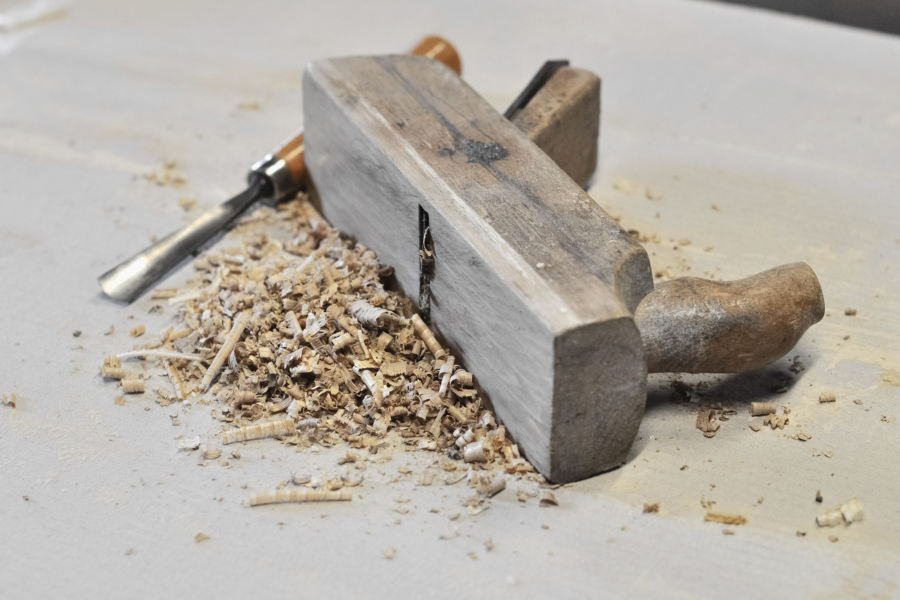
Antique tools. The tools of many moons ago. The tools of which woodworkers, craftsfolk, and makers – at least of the serious kind – continue to hunt for and use. You might consider yourself one of them. If you do, excellent. This article is for you.
In an ideal world, you’d just nip into your local antique tool shop and grab a Stanley No. 4 plane or a Disston backsaw off the shelf. Hand over a few bob. Get home. Prep them. Do their workshop induction ritual. And they live happily ever after. But that’s rarely the case.
So, antique hand tools, where doth thou hide in all the lands? That is thy question. And today thee will have thy answer.
Why do antique tools matter today?
In three words? They’re built different. Now, I’m sure some tools of yestercentury did whittle down to dust. But in a lot of cases, antique hand tools still outperform many inside modern toolboxes. In fact, independent analyses of vintage Stanley blades show edge retention several times longer than typical modern mass-market equivalents.
Back then, manufacturing costs weren’t being squeezed like today. It wasn’t uncommon to find tools built from (quality) cast iron, solid brass, dense hardwoods like beech, applewood, or rosewood, and then hand-finished by craftspeople who took great care in executing tiny, perfect details until the sun set.
I’d even go as far as to say those tiny details are the reason why a well-kept plane or handsaw from that era still feels alive in your hands today.

TLC: Tool-loving care
To me, though, the biggest difference between old tools and new tools is the philosophy behind them. In other words, the care that goes into making them and the care they demand when you use them.
Antique tools were built to be maintained by their owners. The ones that survived weren't cheap. So they had to be looked after. And because they were typically made by hand, they were easily repaired. Reputation was everything. Modern budget tools, by contrast, lean on mass-produced, easy-to-machine materials, hoping you’ll just buy another when they fail.
The care shows up in how the tools feel to use, too. A well-set hand plane or saw won’t let you rush it. It forces you to slow down, feel the cut and trust your own hands instead of a machine’s presets. There’s something to be said about the immeasurable value that brings.
The antique tool family tree
Before you start breaking specs and cashing cheques, it helps to know what types of antique tools to look for.
Planes
These hold a chisel-like blade at a fixed angle so you can flatten, thin and shape boards. High-quality wood planes often have hand-carved bodies, solid brass fittings, and totes made from premium woods like rosewood or beech. Look out for Stanley planes (No.4, No.5), their Bedrock line with flat frog seats and British Norris or Spiers infill planes prized for their quality feel.
Chisels
There are three broad types of antique chisels: woodworking, carpenters, and lathe chisels. Look for “CAST STEEL” stamped on the blade or socket (it’s usually a mark of premium crucible steel). And keep an eye out for speciality, curved blades.
But, depending on where you buy from, make sure you inspect the blade and handle for abuse. The older the chisel, the higher the chance it’s been mistreated (like in the blasphemous act of paint stirring).
Saws
What types? Handsaws, backsaws, keyhole saws, see-… oh wait, no. These are collectable and highly usable. Good ones have well-shaped applewood or beech handles (e.g. lamb’s tongue design), and earlier saws use split-nut screws to hold the handle on. Disston is the giant of vintage saws, easily spotted by its ‘Disston’ blade stamps and medallions. But Atkins, Simonds and Bishop also make excellent saws.

Braces and hand drills
These bore holes manually. High-end braces feature ebony-and-brass “Ultimatum” frames. Manual drills of this era could also feature other highly prized, exotic materials, such as rosewood, precious metal, or ivory. The North Brothers “Yankee” line is one to keep an eye out for. This includes the No. 130 spiral driver and the No. 41 push drill.
Layout and measuring tools
Tools like brass-bound folding rulers, sculpted plumb bobs, and precision levels and squares, once carried the entire burden of accuracy. L.S. Starrett remains the gold standard here.
What good condition looks like and what to avoid
Whatever source you buy from, the same rules apply. A genuinely good antique tool feels sturdy and balanced in the hand. Ideally, with no wobble or play in the joints, because a wobbly one is rarely a good one! (If you want to use it anyway)
The metal and wood should carry an honest, thin patina (i.e., signs of use/aging) rather than a mirror polish or being buried under an inch of varnish. All screws, nuts, springs and adjusters should be present, original and free moving, and working surfaces like plane soles or saw plates should be flat and kink-free.
Thanks to their handmade-ness, some antique tools can be simple to repair… but they can also be rather challenging. So to help, keep your eyes peeled for red flags like:
- Deep pitting on critical faces like square blades, plane irons, or saw teeth. The ultimate accuracy and strength sucker.
- Missing parts on complex tools, especially planes with non-standard threads, because sourcing replacements later is painful and expensive
- Hairline cracks around plane mouths or frog seats
- Over-polished tools where wire-wheel cleaning has stripped maker marks and rounded crisp detailing details
- Frankenstein-like-tools with mismatched patina or modern metric hardware forced into historic threads.
Of course, there will be some grey areas and you’ll have to use your best judgement, but these should help you avoid obvious pitfalls.
Right, time for the good stuff.
Where to find antique tools offline
For many serious makers, the hunt is half the fun, and the 21st century hasn’t killed offline hunting so much as changed where you go. Offline sources are the place to train your eye. Even if you end up buying mostly online, a few mornings at the following locations will teach you to spot better antique tools faster.
Here’s where to try:
Flea markets, car boot sales, and garage sales
These remain prime hunting grounds for working-grade tools. You’ll find everything from rusty planes to boxes of mixed chisels. The trade-off is time, since you’ll sort through plenty of junk to find a gem. Arrive early, bring a small straightedge and square to check soles and blades, and don’t be afraid to haggle.
Estate sales and house clearances
More of a thing over the pond than to us Brits, but they’re still about. They can be great spots when a long-time craftsperson’s workshop gets cleared. Tools are often sold in lots or as full chests – hopefully with consistent owner marks and honest wear. Checking local estate sales listings and being ready to travel pays off, especially for complete sets.
Antique shops and general vintage dealers
Bit of a mixed bag. Some staff know exactly what they have and price accordingly (boo); others don’t, which can work in your favour. Use your condition checklist, don’t be sucked into shine and look beneath the dusty rust dust to find the real value.
Tool fairs, swap meets, and club events
These are usually run by local associations and woodworking clubs, bringing dealers and collectors together with tables of antique and vintage tools. These events might suit you if you want less junk-sorting and more focused browsing, since you can ask questions directly and handle everything there.
Where to buy antique tools online
The internet has turned local rarities into global opportunities and created a clear divide between bargain hunting and curated buying. After some offline training, however, you should be in a good spot to find the hidden gems.
General marketplaces
Think, eBay, Facebook Marketplace, Gumtree, Etsy, and classified sites host huge numbers of vintage tools. You get worldwide selection, saved searches and alerts, and access to “barn finds” listed by non-specialists. The trade-off is variable descriptions and conditions. And depending on where you’re buying from/to, you might have shipping and duty costs to contend with.
Specialist online dealers
These folks generally clean, restore and grade tools for you before listing them. Some even do you the honour of adding detailed photos and descriptions. They know what buyers need to make informed decisions, and they generally provide it. You’ll pay more than flea market prices, sure. But the tools arrive ready to work and are backed by the dealer’s reputation.
Boutiques and curated marketplaces
They operate more like galleries, offering fewer total items but each one selected for uniqueness, quality, or story, which suits collectors chasing something special rather than a quick fix. Good places to look, sure, but not for the bargain hunters among us.
Whichever route you choose, always check “completed” or “sold” listings where you can to see real prices rather than optimistic asking prices. It’ll save you the misfortune of overpaying!
Use communities and networks to find better tools
Going lone wolf and bargain hunting alone is fine – and fun – but plugging into communities will make you unstoppable. Online forums and groups dedicated to woodworking and vintage tools (e.g. r/handtools, r/vintagetools, and r/woodworking) act as live marketplaces, advice centres and provenance checks all at once. Woop. Members share listings, flag bargains, warn about problem sellers, and let others know when they’re thinning their own collection.
Offline, local woodworking clubs, maker spaces, and hand tool meetups (yes, that’s a thing) often have informal trading tables or mailing lists where tools circulate among enthusiasts. Building relationships with a few seasoned collectors is genuinely valuable, since they’ve already put in decades of learning – and will often keep their eyes and ears open for specific tools on your behalf.
Budgeting and expectations in today’s market
Antique tool pricing has become a bit two-speed in recent years. Global online markets and collector demand have pushed up prices for pristine, rare tools, while common working-grade tools have generally softened compared to a decade ago. There’s still a large pool of affordable user tools if you’re willing to do some cleaning though.
Of course, this will vary from tool to tool, but as a guide, rough price bands look like:
- Working-grade/common: roughly £15 to £80 for standard Stanley Baileys, common later Disston saws, Yankee drivers, and typical 20th-century electric tools.
- Mid-range/fine users: £100-£500 for earlier type planes, pre-1900 saws with crisp etches, clean Starrett layout tools and complete socket sets.
- High-end/rare collector: £500 to £12,000 or more for pristine or rare items like complete Stanley 55s, Norris or Spiers infills, and rare embossed axes.
If you’re building a functional workshop, you don’t need the top band. A “raw” starter budget of roughly £50 to £150 lets you assemble a basic user set, such as a No.4 or No. 5 plane, a Disston crosscut, and a handful of good socket chisels, provided you’re comfortable buying dirty, unrestored tools and putting some grease in your elbow.
MetMo’s modern antique-like tools
Antique tools prove something we believe very deeply: good mechanical ideas don’t expire. We love to revive century-old patents and re-engineer them with modern materials and precision machining. But most importantly, we care. That’s why everything we make comes with a 200-year guarantee.
For example…
MetMo Driver
The Driver is a full-metal ratchet screwdriver reimagined from Conrad Baumann’s 1950s design. Machined from aerospace-grade materials and delivering up to 70Nm of torque, it’s perfect for heavy-duty jobs and less-heavy jobs.

MetMo Pocket Grip
Pocket Grip is a 5-in-1 EDC multitool, inspired by the 1913 Triplet Grip design we found at a flea market. It applies up to 21kg of clamping force and fits effortlessly inside your shirt pocket. Machined from titanium, stainless steel or aluminium, you’ve got a pick of the bunch for whatever your tool taste decides.

If you want to see some more, take a look at the range here.
The hunt for (no) rust begins now
So, antique tools, there art thou. Hopefully thee can now find ye and enjoy every second of it. There’s never been a better time to find them thanks to online marketplaces, dealer networks, and communities. So whether you’re chasing a Stanley No.4 or pairing your antique kit with something (epic) like the MetMo Driver, the goal is the same: tools built to last that are used like they’re supposed to be for years and years to come.
I hope you’ve enjoyed reading. Make sure to share your antique tool finds in CubeClub or our subreddit. And if we don’t meet in email before, I’ll see you in the next.
Share:
The 5 EDC tools every cyclist needs (with bonus options)
A sprue-pernatural toolkit for beginner model making