



It’s late. Your garage light hums, and there’s a torch that’s found itself clamped between your teeth. Somewhere behind the engine, past a tangle of hoses, and a rather awkwardly positioned bracket, sits a bolt. An up-tight, moderately rusted-on bolt. And it needs to come off.
The socket slides on perfectly. You shuffle closer for a stronger position, sort of putting your shoulder over the top. The ratchet handle moves a few millimetres… then meets metal. You pull back. Push again. Nothing. “What about surprising it?” You try it quickly. Nothing. The bolt stays where it is.
Ladies and gentlemen, you can put your can of engineering swear words away. Why? Because this is the most classic of swing arc problems. Which, if you’re here reading this, I’m sure you’ve come tip to tip with before.
There’s no denying ratchet swing arc problems are a mega pain in the bolts. But, using what I’m going to share with you today could be something you never, ever, ever experience again.
First, some due diligence.
What is a ratchet swing arc?
A ratchet swing arc (not to be confused with golf swing arc) is how far you have to move the ratchet handle before the ratchet grips and turns the bolt — the smaller the number, the tighter the space you can work in.
And, on a standard ratchet with one pawl, you can work out the swing arc out with some super simple maths. Just divide 360 by the number of teeth on the gear.
Being the mathematical genius I am, I’ve saved you some hard thinking on some commonly sized ratchets:
- 36-tooth ratchet: 360/36 = 10º swing arc
- 72 tooth ratchet: 360/72 = 5º swing arc
- 90-tooth ratchet: 360/90 = 4º swing arc
- 120-tooth ratchet: 360/120 = 3º swing arc
In practice, you need a slightly higher angle because every ratchet has a little play. Stuff like friction, handle size, back play, etc all interfere to some extent. ANYWAY. The super-complex formula above shows you how the types compare.
How do ratchets work?
Every ratchet does the same job. And some better than others.
*Meddles in former ratchet*
They turn a bolt when you move the handle one way, and let the handle move freely when you bring it back. The difference between them, however, is how each type of ratchet grips.
Let's have a look.
Gear and pawl ratchets
Inside the head of a traditional ratchet is a round gear with teeth around its edge. The gear is joined to the square drive that holds your socket. Next to it sits a small toothed lever called a pawl. A spring pushes the pawl against the gear.
Turn the handle in the drive direction, and the pawl succinctly locks into the teeth. The gear turns with the handle, and so does the bolt. Turn it back, and the pawl’s angled teeth slide up over the gear’s teeth, then drop into the next gap. That drop is the sweet, sweet, soul-caressing click you hear. *Chef’s kiss*
But… the pawl can only grip once it has cleared a full tooth, and if the handle can’t move that far, the ratchet does nothing. The simplest fix is more teeth.
High-tooth-count ratchets
If you put 72 teeth on the gear instead of 36, some simple math tells us the pawl has half the distance to travel before it catches. The swing arc then drops from 10º to 5º, and a 120-tooth gear would take it to 3º.
The trade-off, though, is tooth size. If you jam more teeth onto the same sized head, each tooth will have to get smaller. That’s the same load across, now, smaller teeth. And this can lead to higher wear rates. Or at least it would have… Fortunately, the folks that make and design ratchets know a thing or two about them, and they use pawls that grip several teeth at once, spreading the load. They also use harder heat-treated steels too.
(It’s worth noting that if dirt and stuff gets inside high-tooth heads, that can interfere and cause them to slip/wear away. Best keep your teeth clean, eh!)
Multi-pawl ratchets
Those smart ratchet-designing folks also made another means of keeping the swing arc low. Adding a second pawl. The two pawls are offset by half a tooth. So, when one sits on top of a tooth, the other is halfway into the next gap. So every half-tooth movement, one of them catches.
GearWrench’s 120XP is a well-known example. It has a 60-tooth gear and two stacked pawls that take turns to engage. That gives 120 positions and 3º swing arc, with the teeth of a 60-tooth ratchet. *Chef’s kiss x2*
Although that does get me thinking… could you go for like 4 or 6 pawls? Fiddly, maybe? (Are these a thing? Let me know).
Zero-degree (gearless) ratchets
Zero-degree ratchets, or rather gearless ratchets (Zero-Degree is a brand name), get rid of the gear, the pawl and the spring. Goodbye, my fellow clicky friends. Hello, smooth roller clutch.
These went “mainstream” thanks to a few viral videos a little while back. But those who know, know. And those in the know know that they’re not so new.
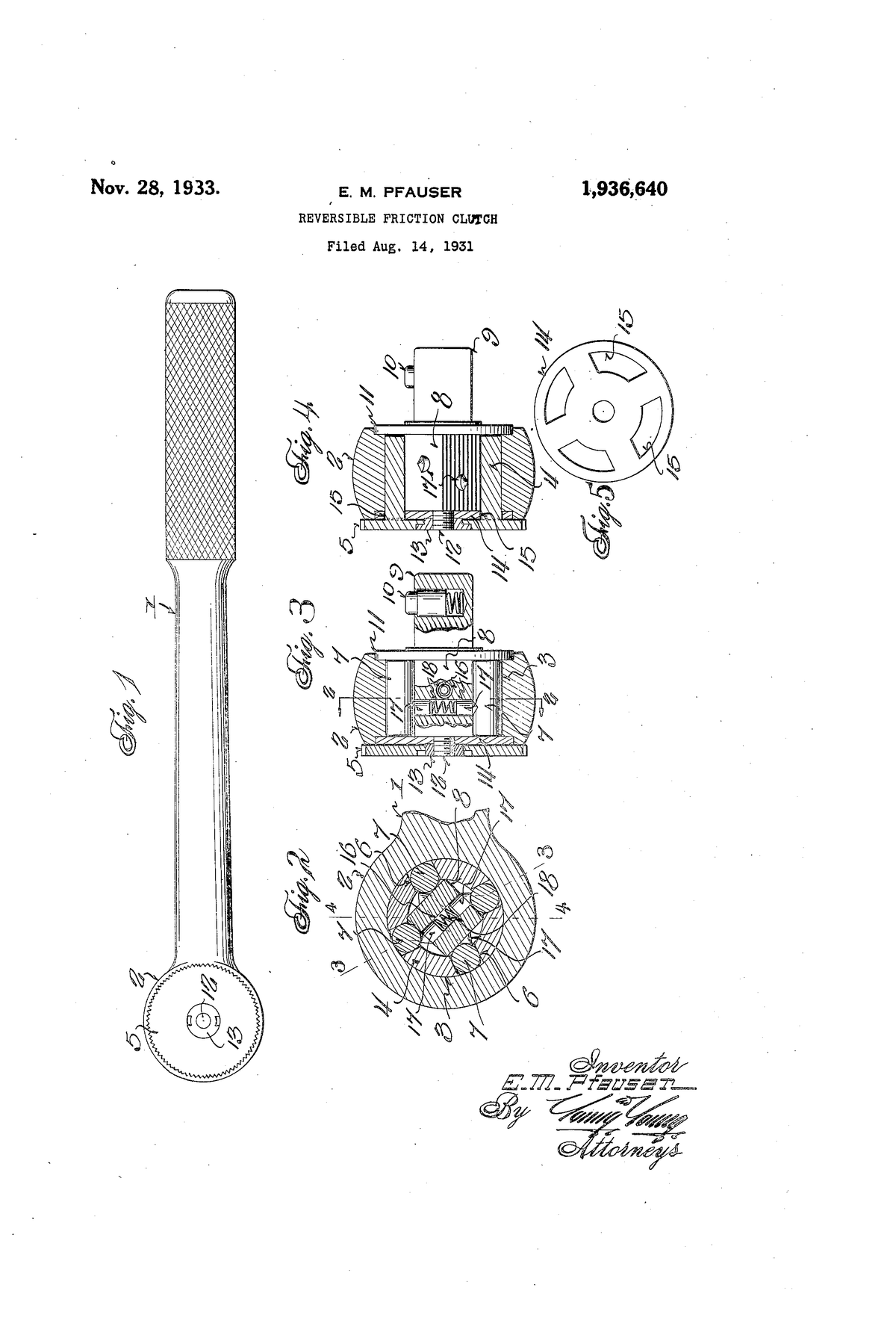
In fact, some of the earliest patents go back to 1931, courtesy of E. M. Pfauser and Blackhawk Manufacturing Co.

Instead of teeth, Pfauser’s design used rollers wedged between the inside of the handle and flat faces on the socket spindle. This puts torque in one direction. On the return stroke, they release, letting the handle freewheel. Turning the selector sleeve shifts the rollers to the opposite side, reversing the drive direction.
(Side note: this design was then improved a few years later, and a positive lock was added to stop the direction-selector sleeve moving accidentally during use. Not really the mechanism, but thought you might like to know.)

Modern gearless ratchets work on the same idea. Inside the head is an inner cam fixed to the square drive. It’s usually hexagonal or lobed so its outer surface has flat, tapered sections. Around it sits a ring of hardened steel rollers, held in place by a cage. The rollers sit inside a hardened outer ring, called the race, which is part of the head.
Each roller sits in a gap that narrows in one direction. When you turn the handle the drive way, the rollers jam into the narrow end of their gaps. That locks the cam to the head, and the bolt turns. I guess, in ways it works like a door wedge, where the harder you push, the tighter it grips.
If you then turn the handle back, the rollers move into the wider part of their gaps. Now they roll freely over the cam and the handle returns without dragging the bolt.
Because the rollers are always touching the cam, they lock almost the moment you move the handle. There’s no tooth to clear. And for the bolt assassins out there, the folks who can’t help but fix stuff when others are sleeping, there’s good news: these gearless ratchets are silent.
Although, interestingly, a patent in 2016 added a separate (non-torque bearing) tooth indicator that clicks on the return stroke. Tactile feedback reigns supreme.

Which type of ratchet is best?
Sorry, but there’s no single winner. As is always the case. Different jobs require different tools. So be free, reader, go buy more tools.
Each type of ratchet gives up something to gain something else.
For general garage, DIY work, a good 72 or 90-tooth ratchet handles most. They’re slim, strong, affordable, and the click reminds you that you are actually doing work.
If you’re working in cramped spaces, and I don’t mean under the sink, but engine bays or with Ford oil filters, then a multi-pawl ratchet is probably worth the extra cost.
For the tightest of spots, though, a gearless ratchet is hard to beat. It also helps with loose bolts. You see, on a toothed ratchet, the drag on the return stroke can turn a loose bolt back with the handle. A gearless ratchet has almost no drag, so the bolt stays put. (Or just finger-tighten if you can get them in there)
What about the strength of a gearless ratchet?
With no teeth, no pawl, no spring… how do these gearless wonders hold up against a rusted exhaust nut?
In short, not great. With no teeth to strip, the load spreads across several rollers. Gearless ratchets generally meet ASME torque standards, and in destructive tests, the square drive often twists before the mechanism fails. Even so, owners generally keep them away from seized bolts. That’s good practice with any ratchet.
So to be safe, best just get one of each. (Hehe)
We like ratchets too
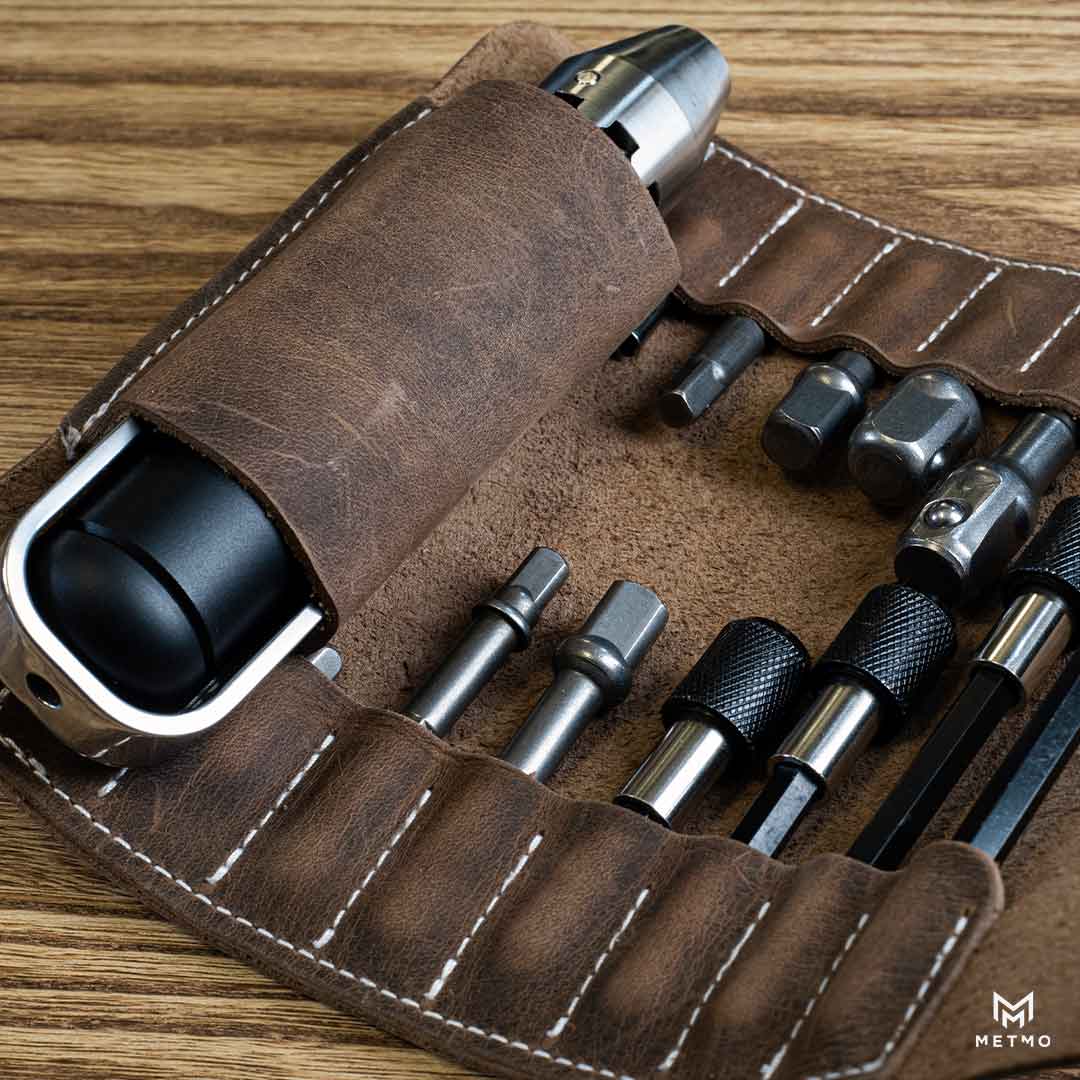
We happen to have a few ratchety, chucky and geary devices ourselves:
Go BIG for clicks
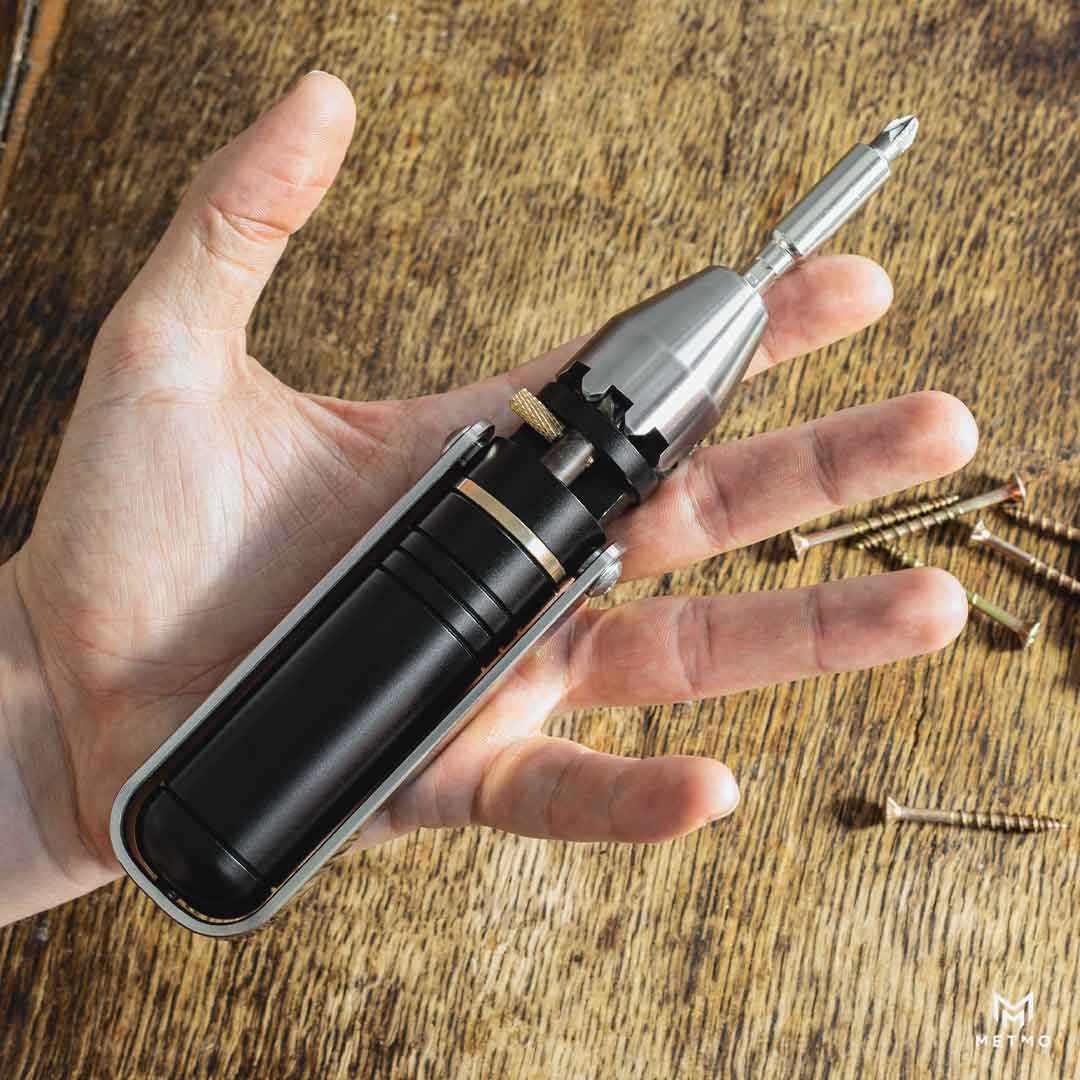
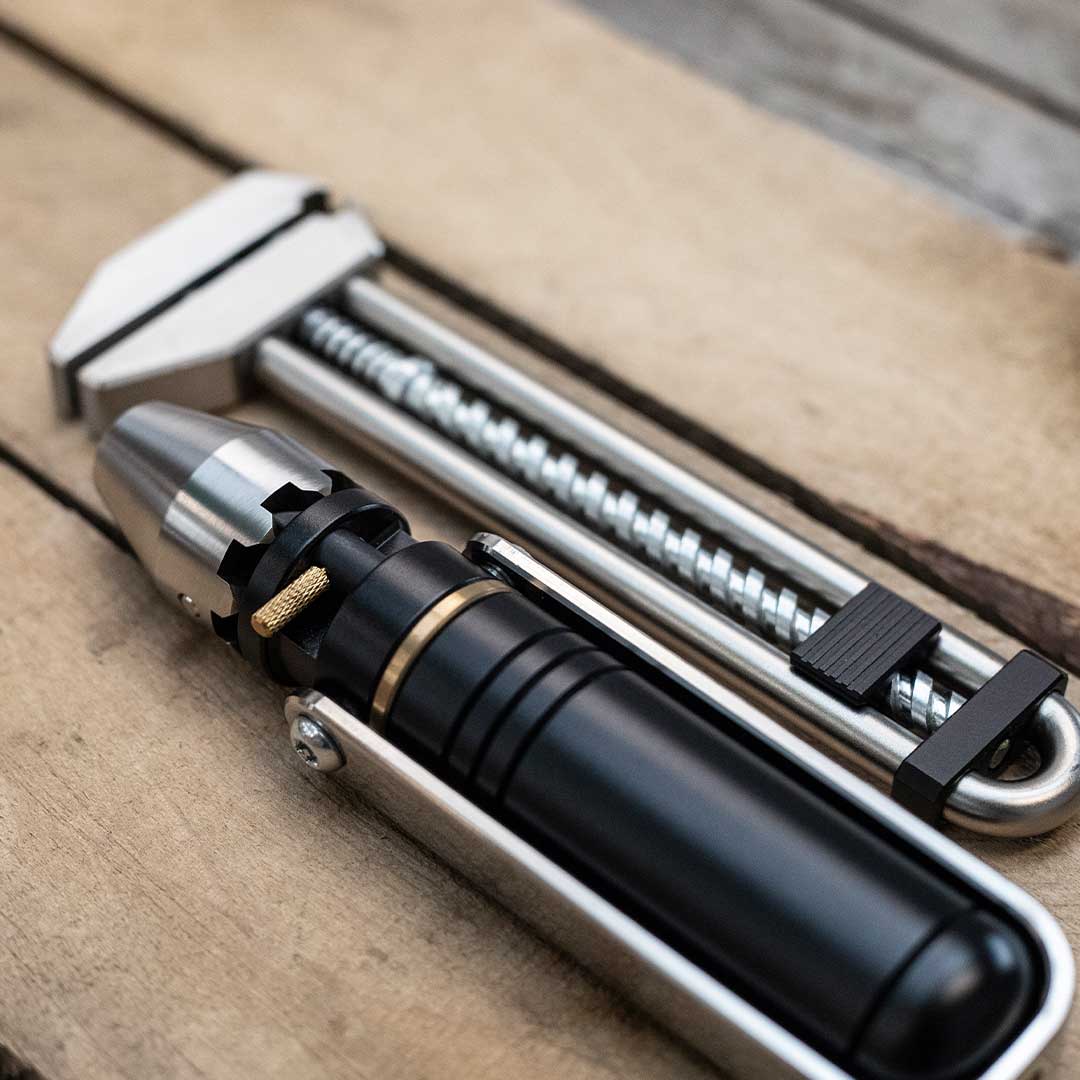
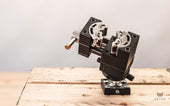
Clicks make the world go round. Our world anyway. MetMo Driver puts the ratchet mechanism front and centre. LOOK AT IT.

Ooof
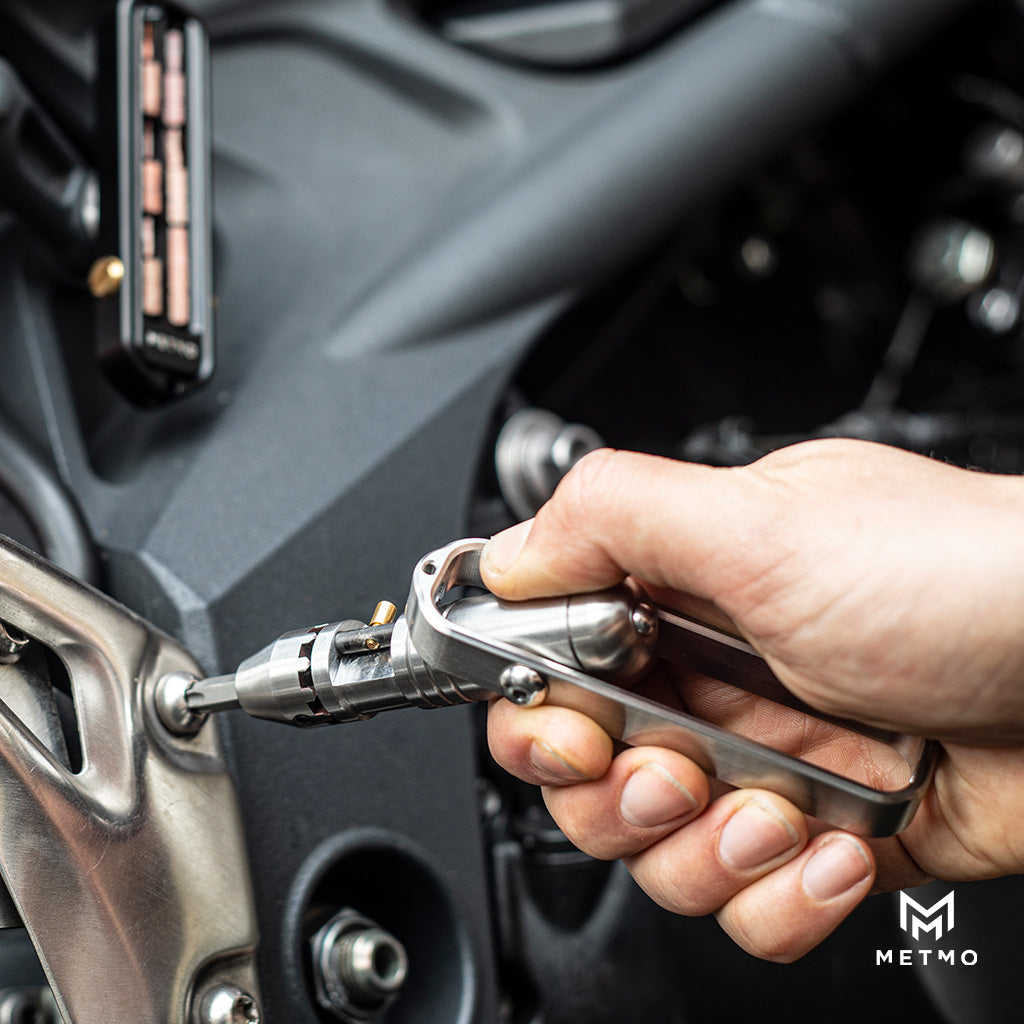
It sits outside the body, so you can watch the chuck and pawl work together in perfect harmony. A brass trigger flips direction or locks the ratchet out completely. Then, if you fold the arm out, it works like a brace, delivering over 70 Nm of torque through standard ¼” hex bits.
You can learn more about Driver here.
Go SMALL for clicks
On the smaller side, we have Pocket Driver. This fits an exposed ratchet into a much smaller body, built for tight spots. Flip the handle and it switches between in-line, T-handle and pistol-grip positions. And like the Driver, it also takes any ¼” hex bit and stores two inside.
(It also won a Red Dot Award!)

You can explore the wonders of Pocket Driver here.
Fiddle with gears
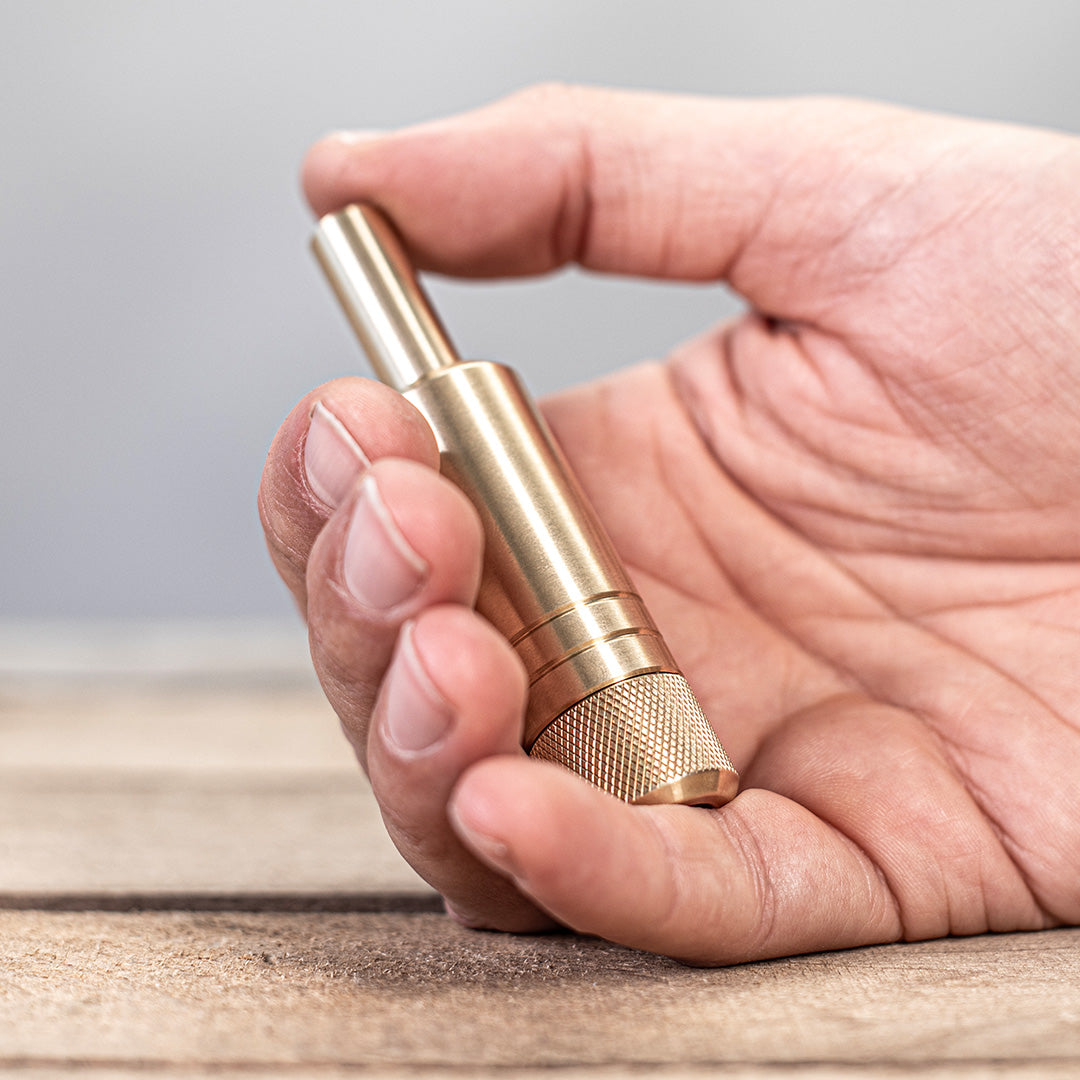
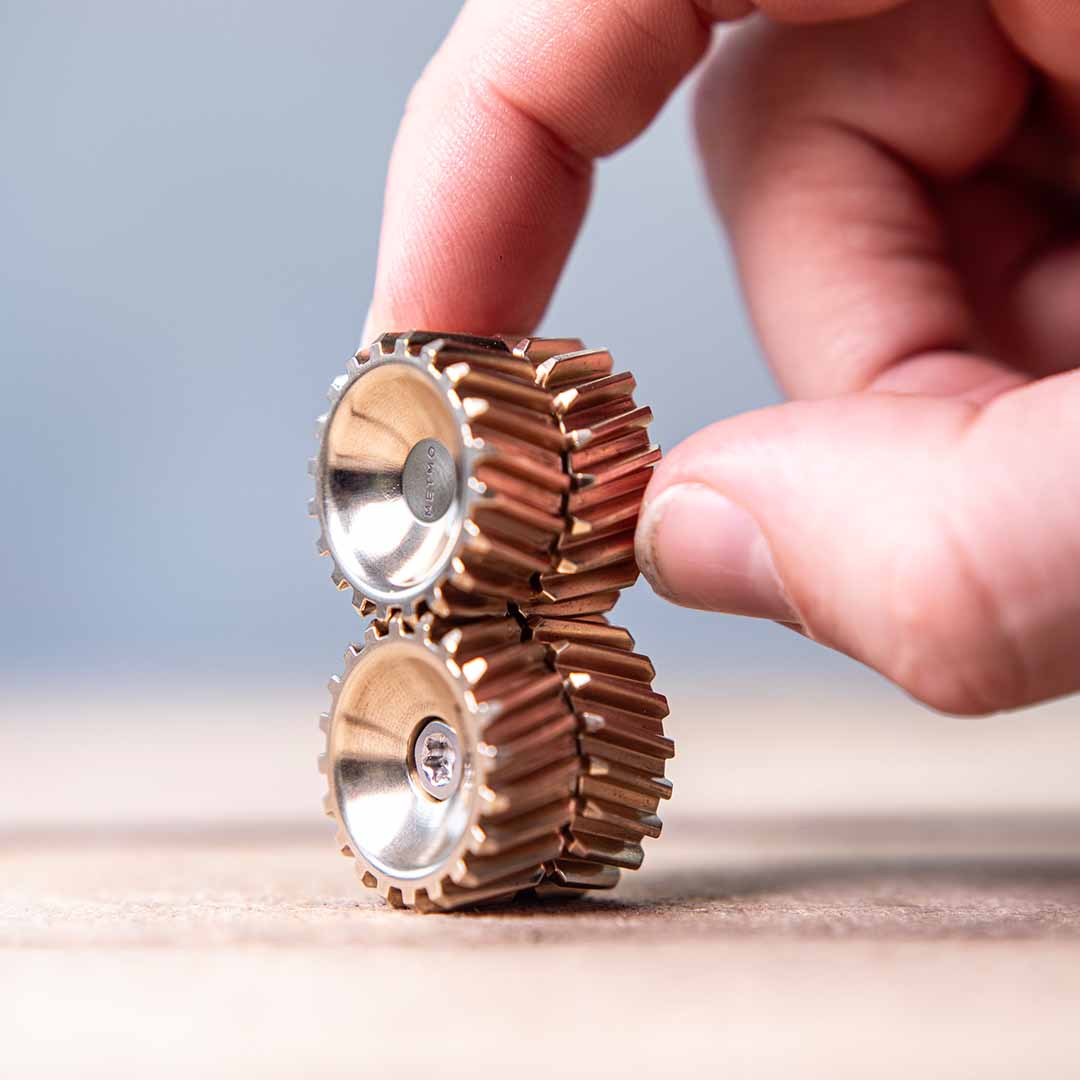
And then, for those of you who just love handling gears, we have Helico. You can spin ‘em, roll ‘em, click ‘em to your heart's content. Choose from brass, steel or titanium - or just get them all :)

Explore Helico and all its skills here.
Pawl things considered
Does this make you a master of ratchets? Maybe. Maybe not. But, my fellow torque lord, you certainly know more about gearless (or zero-degree) ratchets than you did 10 mins ago.
In summary, swing arc decides how tight a space you can work in. More teeth decrease swing arc and mean you can tighten/loosen bolts in less space. Extra pawls shrink it further. A gearless ratchet removes it entirely.
Hope you enjoyed reading.
Come say hello in CubeClub, or if you’re the type, our subreddit too. We’d love for you to join us. Otherwise, see you in the next one. :)
Share:
Euler’s Disc-overy: The History and Physics Behind the World’s Longest Spinning Disk